
Motion Library
Earlier articles
Troubleshooting
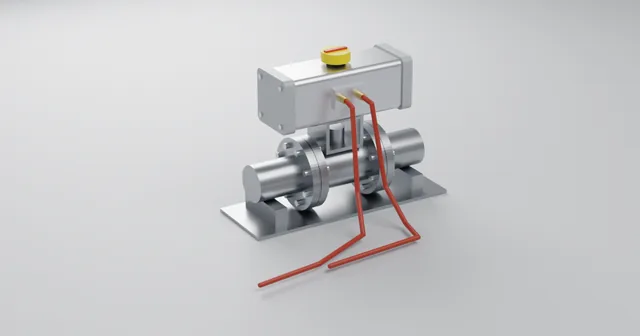
Why a Fail-Closed Actuator Spring Cover Stays After Bolt Removal
The cover plate on a fail-closed spring-return actuator stays put after bolt removal because the spring stack's preload still reacts through the plate against an internal retaining ring or shoulder. The bolts were never the spring restraint. Vent and verify zero pressure at the ports, then follow the manufacturer's documented spring-release procedure for the exact nameplate model.
Troubleshooting
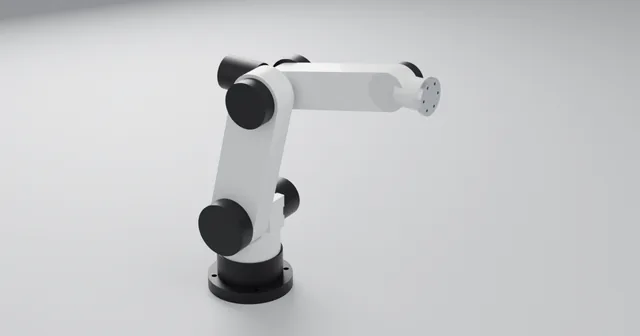
Why the robot arm revision decides the spare parts list
The base model on a robot arm does not identify its mechanical spares: the rating-plate model with its revision suffix and the serial number do. Record both fields exactly, get the revision-specific parts list from the manufacturer or its distributor, and only then trace a wrist-area oil leak to a seal, O-ring or joint assembly.

Troubleshooting
Why a vertical servo axis drops on E-stop or power off
A vertical servo axis that drops on E-stop or control-off has no passive holding force: the motor holds only while the drive supplies torque, and no parameter changes that. The fix is a working spring-applied holding brake, a counterbalance or a self-locking mechanism. Block the axis, confirm the brake option from the motor order number, then measure the brake coil voltage in every machine state.
Explainer
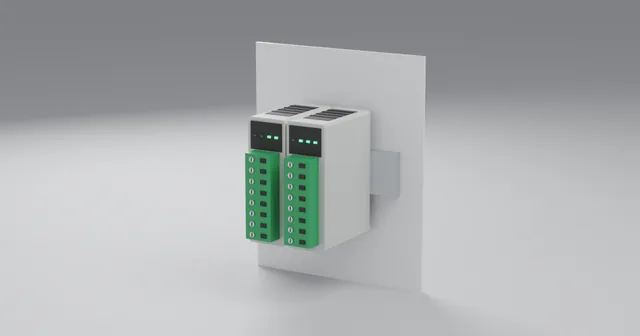
Why an analog output cannot drive a stepper motor directly
No — a PLC analog output supplies a low-power command signal measured in milliamps, while a stepper winding needs amps switched in the correct sequence. Put a stepper drive between the PLC and each motor, command it with pulse-and-direction or an analog speed signal, and scale the pulse count to travel.
How-to
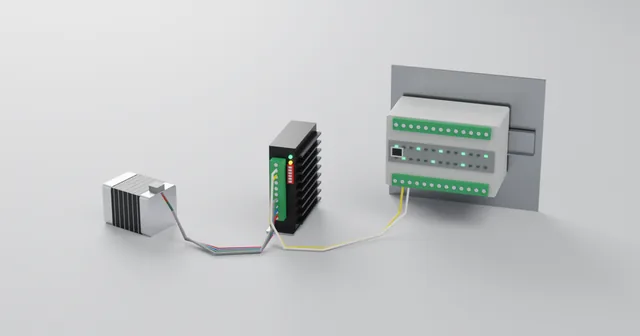
Stepper driver error output wiring to the controller
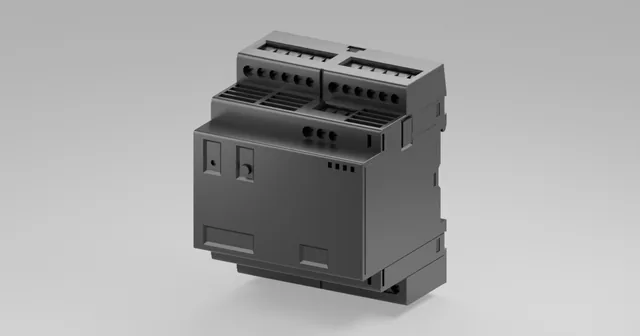
Wire each open-collector error output to its own controller input as a motion-stopped signal — never to the Enable inputs. A driver that faults has already stopped its own axis; the controller reads the input, halts coordinated motion, and blocks restart until the fault clears. Commission eight-wire motors in series first; go parallel only when speed demands it.
Explainer
Why a PLC digital output cannot make a stepper pulse train
An ordinary PLC digital output switched by scan logic cannot produce a steady 2 kHz step pulse train: each pulse is just 500 microseconds wide at that rate, and scan-time jitter becomes pulse-timing error the driver counts as lost or extra steps. Feed the driver's step and direction inputs from a dedicated pulse-output channel, and set shaft speed from pulses per revolution.
Explainer
What an asynchronous servo motor is: slip, torque and drive control
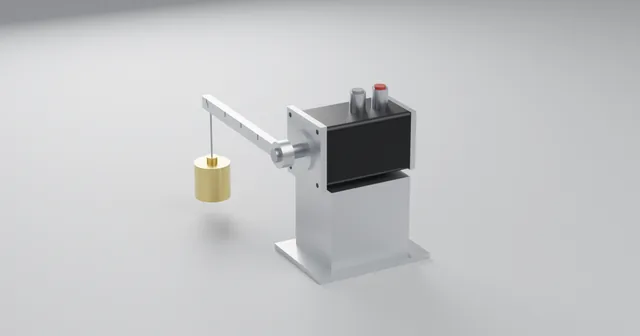
An asynchronous servo motor is a high-performance squirrel-cage induction motor used as a servo axis: the stator field runs ahead of the rotor, and that slip induces the rotor currents that make torque. A vector-controlled drive with the right induction motor model and shaft feedback regulates speed and position to servo accuracy, without permanent magnets in the rotor.
Comparison
Why peak servo torque ratings mislead a CNC mill retrofit
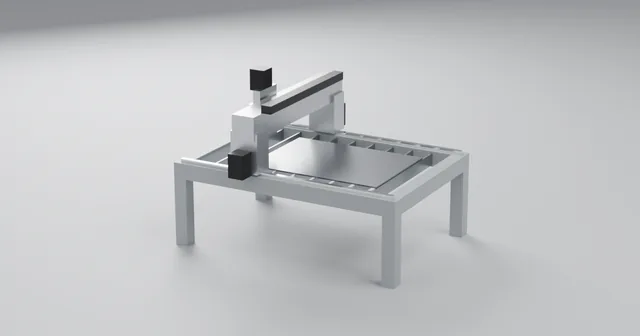
Size every axis on the continuous S1 torque rating, not the peak number: a motor badged 9.8 Nm peak delivers only about 3.5 Nm continuous to 3000 rpm. A drive is compatible only when its feedback format, commutation data and configuration match the motor — an analog command input proves nothing. With two drives failed and one motor physically limiting travel, new matched motor-drive sets on all three axes are the lowest-risk repair.
Troubleshooting
Why a unipolar stepper motor delivers low speed and torque
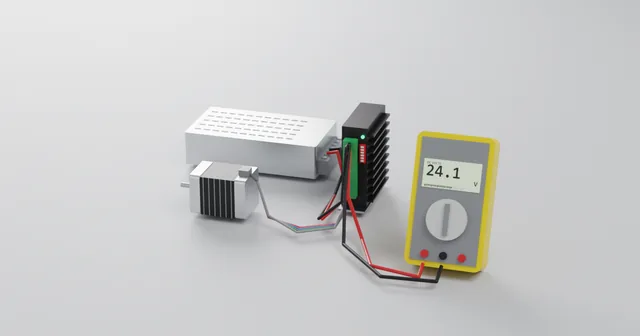
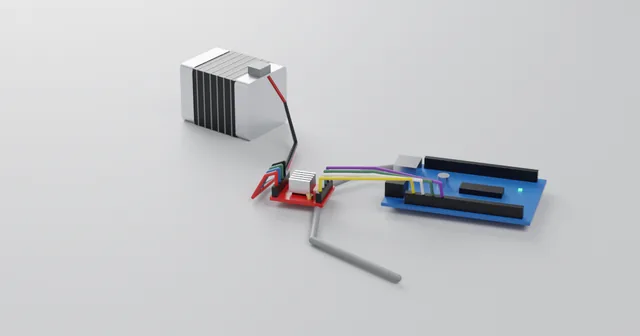
Stepper torque follows winding current, not the supply label: fed from half its rated voltage, the winding carries half its rated current and gives roughly half its torque. Measure the winding's resistance to settle which rating the motor really carries, energize two phases per full step, and move to a current-regulated chopper drive when speed, not standstill torque, is the limit.
Troubleshooting
Why a unipolar stepper sequence fails but a grounded phase twitches
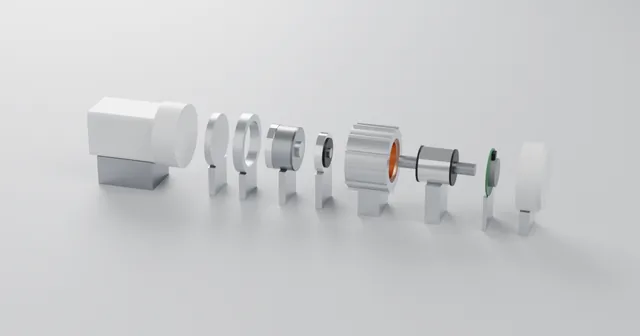
A stepper rotates only when excitation walks an ordered cycle of winding states, one state per step, slow enough for winding current and rotor to follow. Grounding one phase energizes a single winding and seats the rotor at one detent, so the twitch proves the winding path works and the fault sits in state order, bit mapping, logic polarity or step timing, checked in that order.
Selection guide
Which actuator suits a 270 degree robot joint
Size a 270 degree robot joint from measured peak and holding torque, speed and commanded travel at the output shaft, never from the 1-2 A the robot draws. A positional servo rated above those values with 270 degrees of commanded travel, or a geared brushed DC motor with an H-bridge rated above the motor's stall current, are both valid answers; a worked forearm example needs 1.1 N·m peak and 0.8 N·m continuous.
Troubleshooting
Stepper pulse output enabled but motor not moving: jumper first
An output-enabled bit proves permission, not current through the drive's optocoupler. On the H0-CTRIO2 one jumper sets both pulse outputs to sink or source, so a sinking loop landed on the wrong common passes nothing. Fix the control loop, scope the pulses at the drive terminals, then lower the start rate before touching the motor.