
Motion Library
Earlier articles
Explainer
Tracking Products on a Conveyor With an Absolute Encoder
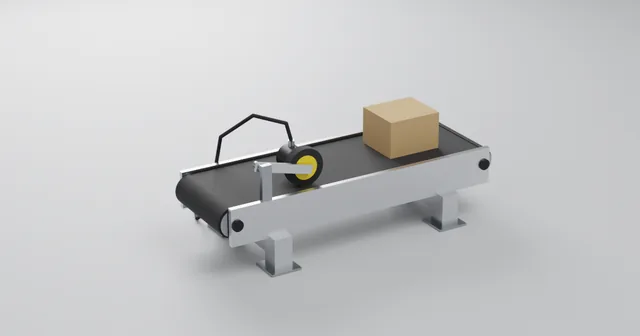
An absolute encoder gives you the conveyor's true position, but tracking only works when the controller binds each product's inspection result to a conveyor coordinate at detection and carries it to the release point. Work out counts per meter from the encoder and roller, size the tracking buffer for the product count, and the robot gets the right part every cycle.
Selection guide
Second encoder on a servo motor: output before NDE shaft extension
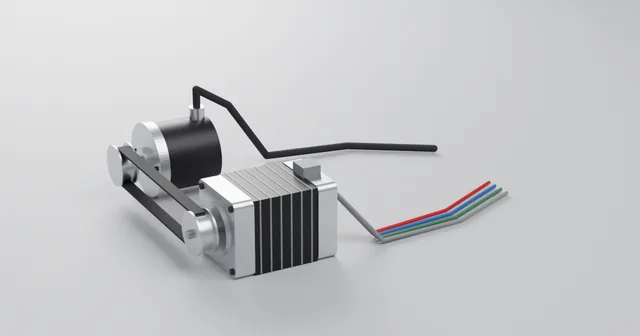
For a spare motor-position channel on a DRIVE-CLiQ servo motor such as a 1FT7, use a drive-side module that emits an incremental TTL signal: an encoder splitter has no pulses to split, and no NDE second encoder appears among the documented 1FT7 options. Fit a second physical encoder only when the second system must measure independently or see the load.
Explainer
Why a servo calibrates again after every power cycle
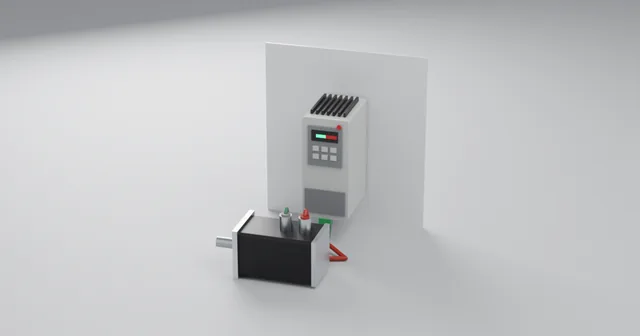
An incremental encoder without an index carries no rotor-angle information across a power cycle, so the drive must physically align the shaft before it can commutate — up to one electrical revolution, 180 mechanical degrees on a two-pole-pair motor. Shortening the calibration scan does not shorten that jump; only feedback whose position survives power-off removes it.
Explainer
Robot cell external axis calibration: turntable and rail
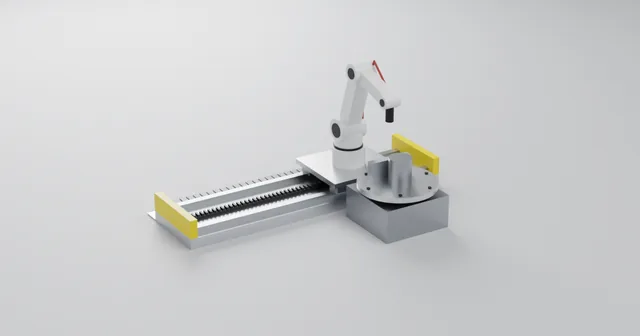
Bind a turntable and a linear rail into one robot cell reference by modeling the geometry at the design zero point and applying the calibration data stored on the controller: the turntable is defined by its root point at 0 degrees, the rail connects through the robot-base input. Prove the setup on a single-axis toolpath first; if the solver reaches without rotating the turntable, the fix is a custom external-kinematics strategy.

Selection guide
Industrial robot arm comparison: reach, payload and repeatability
No public database compares industrial robot arms on price against performance, so build the table yourself from each manufacturer manual: repeatability to ISO 9283, reach, payload read with the flange moment diagram, cycle time on your own move, and degrees of freedom. Quote every supplier against one written scope, drop the arms that miss the numbers, and rank what remains on installed cost.
Explainer
Can a servo spindle retrofit replace a DC lathe spindle?
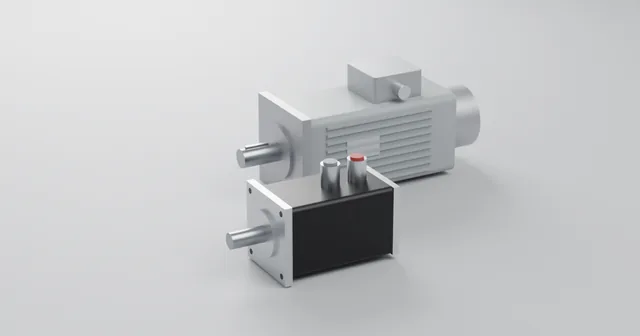
Yes, an 11 kW servo motor and drive can replace a DC lathe spindle, but the kilowatt rating decides nothing by itself. The retrofit works when the servo drive accepts step-and-direction speed commands, the controller's spindle output matches that interface electrically, and the motor's continuous torque covers the lathe's worst cut through the belt reduction. Bench-test enable, direction and speed response with the motor uncoupled before it turns a chuck.
Troubleshooting
What to check after a blown servo amplifier
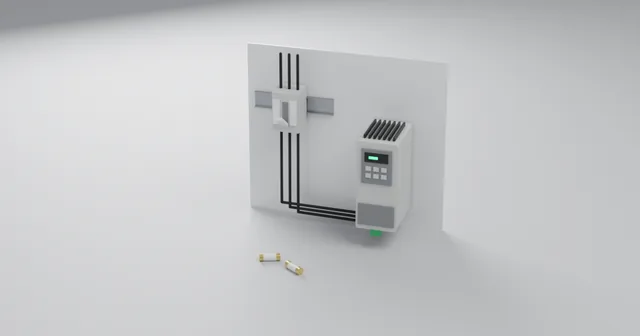
A blown servo amplifier usually has a cause that survives the failure: an axis cable or motor winding leaking to ground, or a brake locked against commanded motion. Before installing the replacement, insulation-test the cable and the motor separately at 500 V DC and require better than the IEEE 43 floor of rated kilovolts plus 1 megohm, free the brake with the axis supported, and wait the drive's documented bus-discharge time.
Explainer
Stepper motor supply voltage with a chopper drive
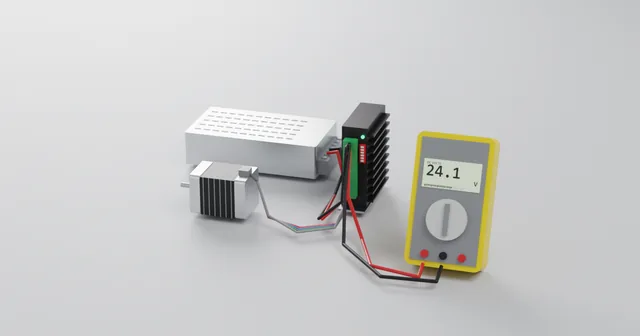
With a current-regulating chopper drive, the supply voltage is chosen from the drive's permitted DC input range, never from the motor's nameplate, and the phase current is set at or below the motor's rated current. Use the highest bus the circuit allows: a lower supply such as 24 VDC slows the winding-current rise, so torque at high step rates drops and the motor stalls sooner.
Explainer
What Makes a Left-Handed Gantry Z Axis a Support Hazard
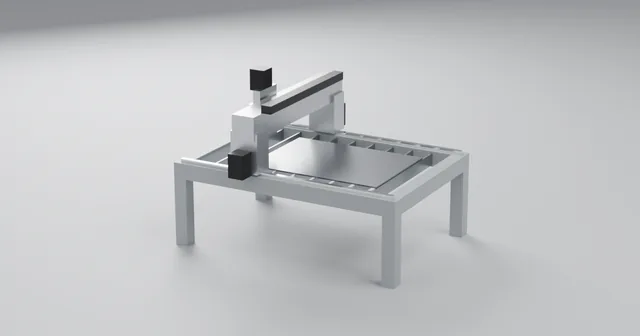
You are not paranoid: a gantry with standard X and Y but inverted Z is left-handed, because negating one axis is a reflection, and no rotation of the frame can repair it without also reversing Y. Invert the Z axis at its definition, negate the stored Z positions, offsets and limits, and remove any compensating inversion from remote-support and third-party interfaces.
Explainer
What a Robot Controller Needs to Run Gantry External Axes
Adding gantry travel to a robot controller is configuration, not programming: each gantry axis is declared as an external axis with its transmission ratio, direction, working range, speed and acceleration limits, channel mapping and calibration offset. Once declared, gantry motion rides in the same move instructions as the arm joints.
Troubleshooting
Why CNC servos won't power up after a battery alarm
A control that stays black after the second power press has failed to start, and a battery alarm alone does not stop servos while control power is on. Measure the control supply and startup permissives first, then check whether memory survived the shutdown: eight months of battery warning plus a weekend unpowered can leave lost or corrupt parameters that block startup until they are reloaded from a verified backup.
Explainer
When a Stepper Driver Is Rated Below the Motor Current
Nothing burns: a stepper drive set below the motor's winding rating chops the phase current at its setting, so the motor runs a little cooler with proportionally less torque. The checks that decide the pairing are matching the peak or RMS basis of both current labels, keeping the supply inside the drive's documented voltage range, and sizing the supply for every drive on the machine.