
Motion Library
Earlier articles
Troubleshooting
Why a Servo Origin Search Misses the Encoder Z Phase
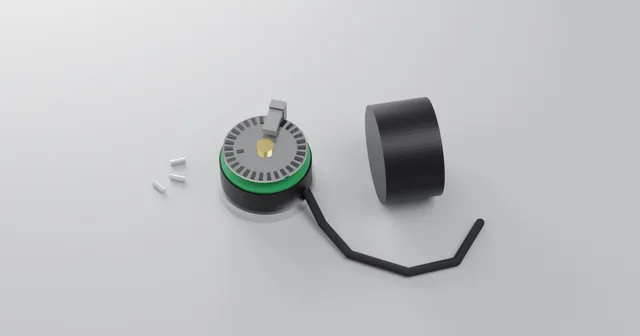
An origin search that moves toward home but never captures the Z phase almost always has no proximity transition to key on, the wrong homing method selected, or the capture stage never armed. Work through sensor, method, polarity and capture status in that order; an index alone is ambiguous by whole screw revolutions.
Explainer
Why a PLC driving an H-bridge needs a phase sequence table
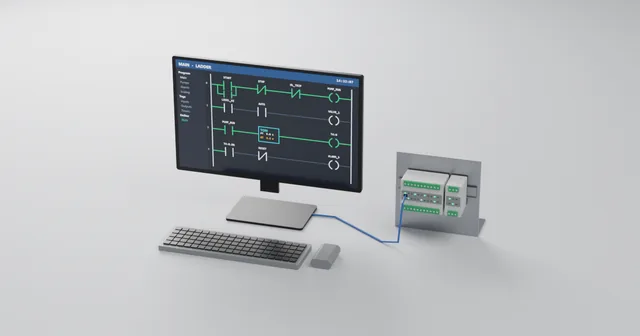
The L298 only switches winding current; it has no translator, so the PLC must produce the four full-step or eight half-step states itself. The design lives or dies on a written next-state table that reads CLK, DIR and MODE and advances exactly one state per clock edge, held in persistent memory and owned by one routine.
Selection guide
What 23 and 163 N·m robot arm joint torques really cost to build
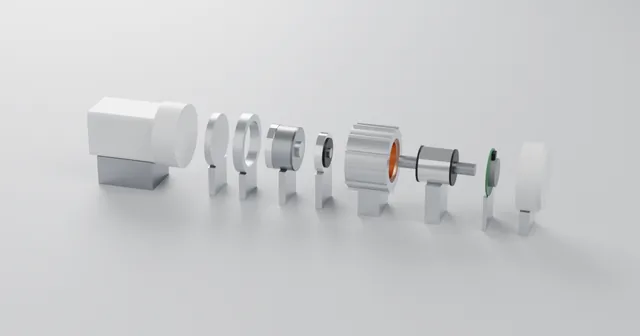
The first joint at 23 N·m is buildable: about 1.4 N·m of continuous motor torque behind 20:1, a 750 W class servo and a 30 N·m class planetary. The second at 163 N·m is decided by the reducer's output rating, the output bearing and heat during the gravity hold — about 1.9 N·m at the motor behind 100:1 — so that joint dominates the bill of materials or pushes you to a used robot or a shorter arm.
Selection guide
Small Offload Conveyor Selection for a Pick and Place
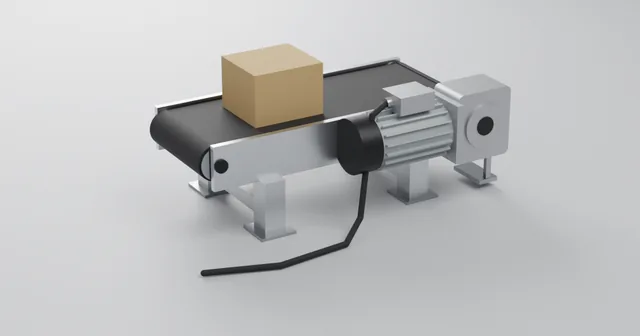
Size a small offload conveyor from three constraints before comparing suppliers: the belt envelope (8 by 18 inches, frame no more than 2.5 inches high excluding the drive), a fixed belt speed above the spacing minimum of about 4.3 ft/min, and a 4,000,000-cycle life over five years. Buy a supported catalog low-profile unit rather than building one, and solve picker timing with the stroke, not with a longer conveyor.
Explainer
Why 8192 Single-Turn Positions Pair With 4096 Multi-Turn Revolutions
8192 and 4096 count different things: 8192 is the single-turn resolution (2^13 angular positions per revolution, one step every 0.0439 degrees), and 4096 is the multi-turn range (2^12 distinguishable revolutions). Multiplied they give 33,554,432 absolute positions over 25 bits, and the 16:1 gearing matches 16-state counter stages — three of them build the turn range.
How-to
Machine builder thrust bearing part number identification
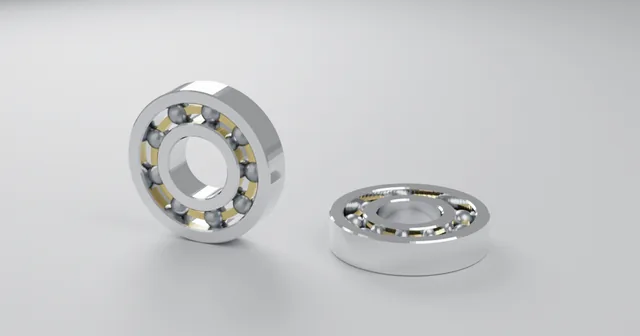
A machine-builder service number for a machining-center thrust support names the assembly the builder supplies, not a bearing a distributor can look up. The designation that identifies the bearing is stamped on the rings along with the matched-set marks, so the reliable route is a planned stop: pull one set, transcribe every marking, and order a complete matched set to what the bearings say.
Troubleshooting
Why a servo amplifier fault appears on all axes at once
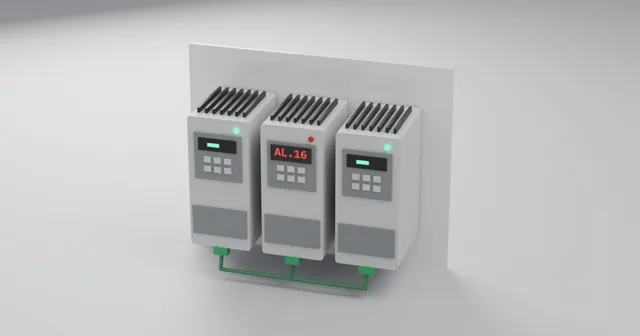
When the amplifier fault appears on every axis at the same moment, the cause is something all drives share: the E-stop chain, a motor overload relay, the amplifier feed contactor, the common control supply or the DC bus. Check that shared path in order of cost, and swap drives only after the fault narrows to one axis.
Comparison
A step and direction servo drive versus an open-loop stepper
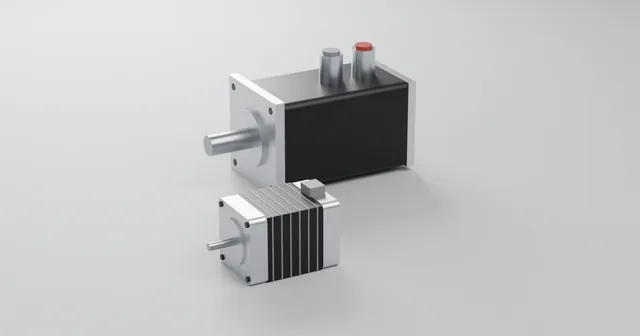
A step and direction servo drive takes the same pulse train as an open-loop stepper drive but closes the position loop inside the drive on the motor's encoder counts, so lost steps become a following-error fault instead of silent drift. The deciding arithmetic is the pulse budget: steps per inch times feed gives the steps per second your controller must supply, and a high-count encoder can exhaust that budget before the motor runs out of torque.
Explainer
Why three stepper axes need dedicated high-speed outputs
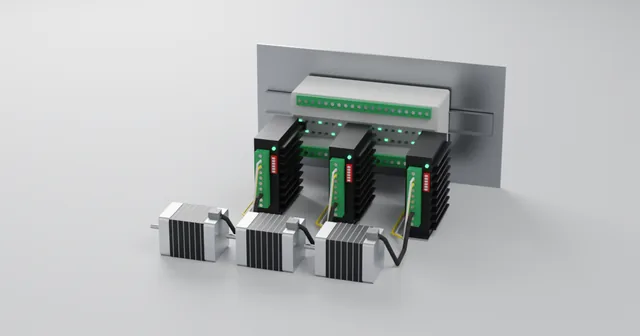
An ordinary PLC discrete output switches through the program scan and carries no documented pulse-train rating, so it cannot feed a stepper drive. The DL06 documents two built-in pulse outputs at up to 10 kHz; run two axes there and put the third on a dedicated high-speed counter/output module that also handles accel, decel and scaling.
Explainer
What an EnDat motor substitution needs besides automatic detection
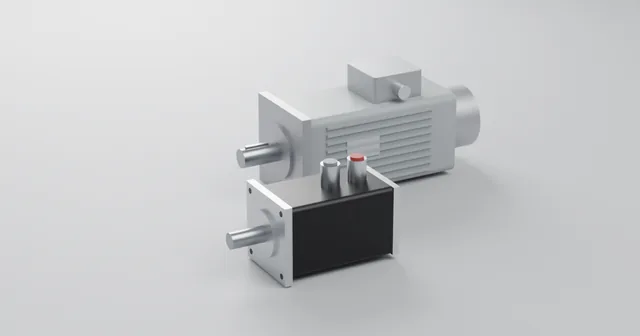
Automatic detection over an EnDat interface identifies the connected motor and nothing else. A substitute servo motor works without application-logic changes only when the drive channel is configured for EnDat, the Physical View carries no fixed motor object for that channel, and the replacement passes the dimensional, RMS and peak torque, speed, connector and brake checks. The order key tells you the encoder type, not the motor's ratings.
Troubleshooting
Why an incremental encoder counts wrong turns per revolution
One measured revolution settles an incremental encoder turn-count fault: with 2,000-cycle channels decoded in x4 mode the raw counter must advance exactly 8,000 counts per shaft revolution, and at 300 rpm that stream arrives as 40,000 counts per second — fast enough to overflow a signed 16-bit register between resets. Measure the raw counter first; retuning the divisor to 6,810 only rescales the error.
How-to
What defines a robot pick and place cycle time of 5 seconds
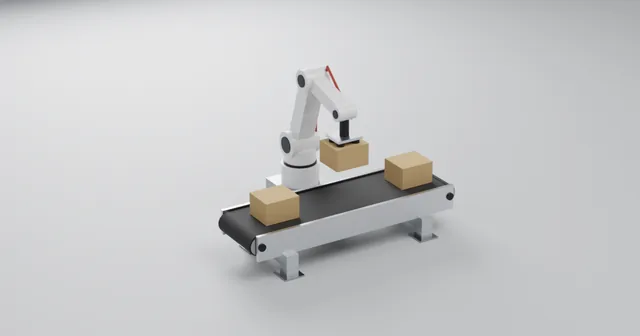
A speed setting cannot guarantee a 5-second pick and place cycle. Define which interval you are timing, measure it with a start signal and a completion signal, subtract the timestamps, then split the result into motion and non-motion time and adjust one motion setting at a time. Treat 5 seconds as a deadline, not an exact duration to synchronize.